
Data
Enrollment
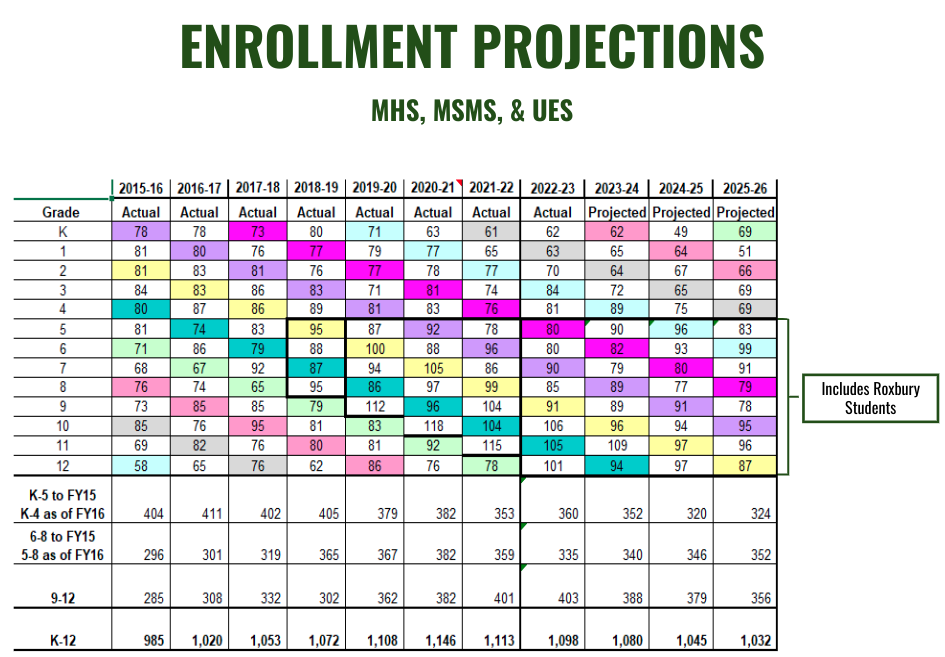
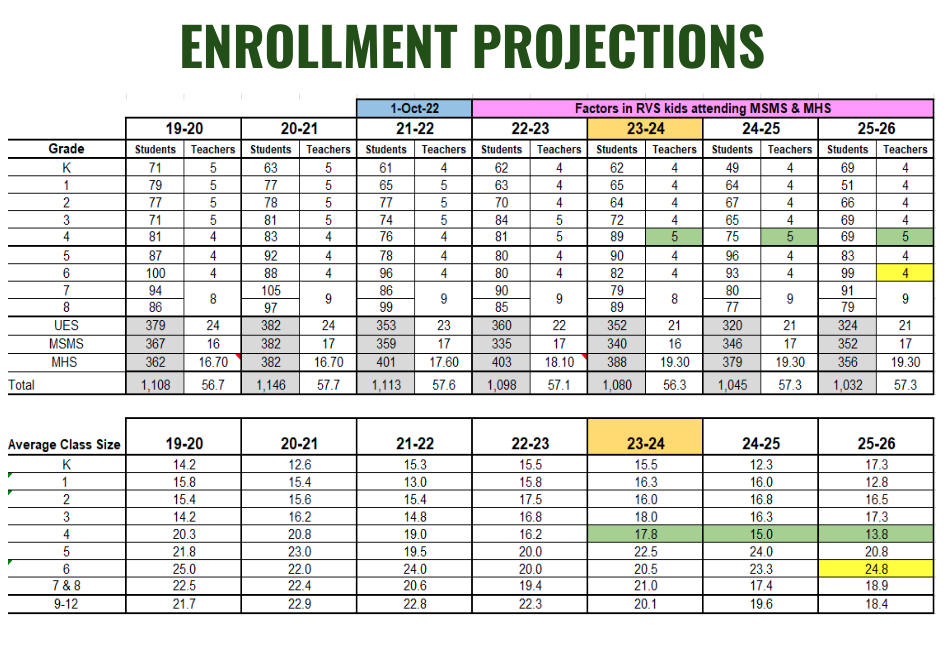

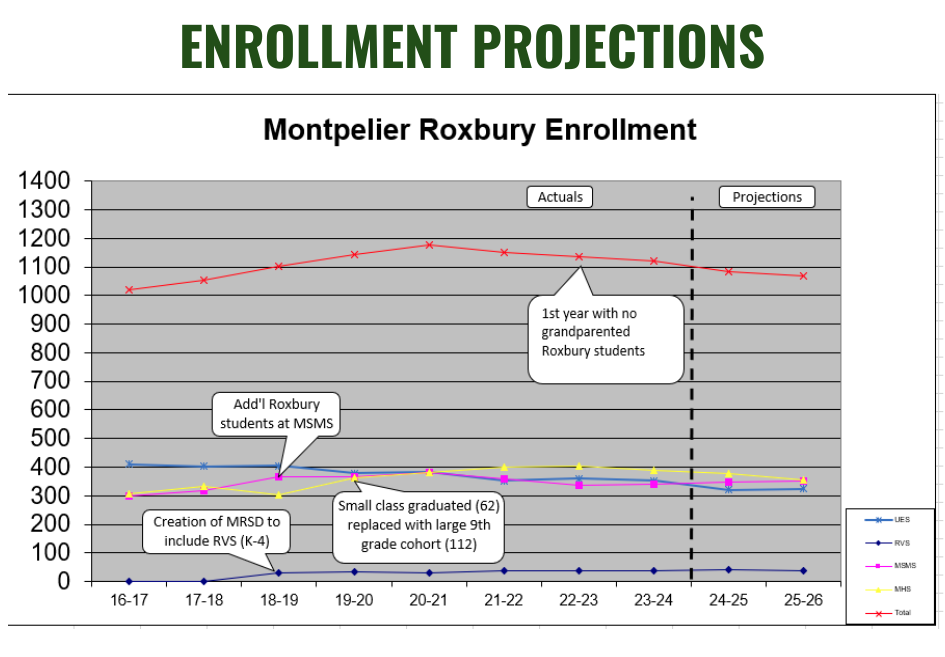
These enrollment figures were originally presented to the MRPS Board of School Directors during the first FY`24 Budget meeting on December 7, 2022.
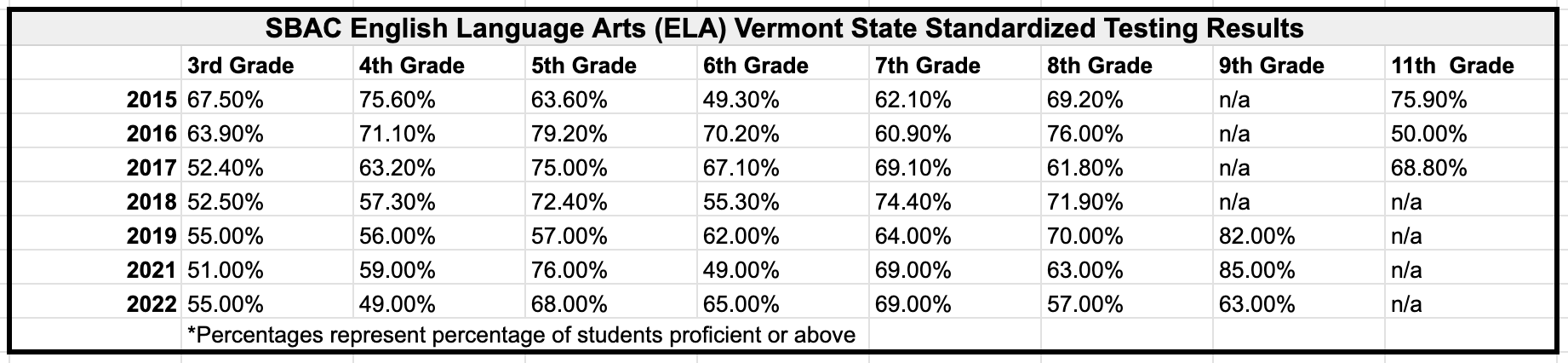
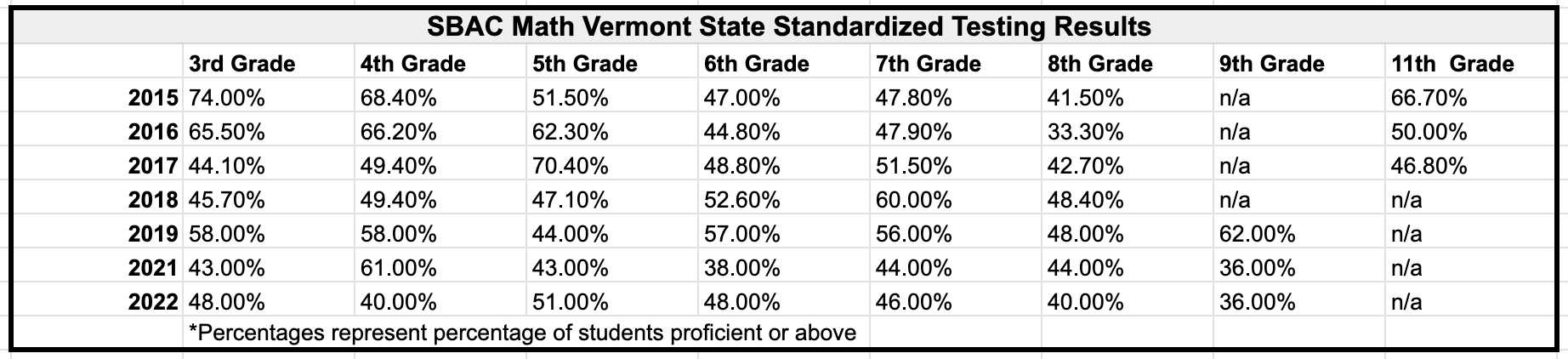
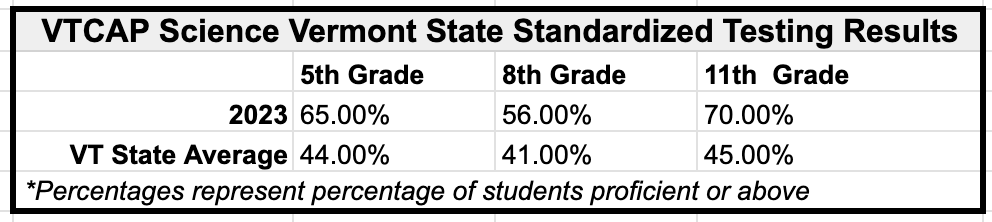
Vermont State Standardized Testing Results
SBAC ResultS
English Language Arts (ELA), Math & Science Assessment
Years: 2015-2022

VTCAP Results
English Language Arts (ELA), Math & Science Assessment
Years: 2023


Data Frequently Asked Questions
-
We use multiple systems to collect, store, and archive student data across the district:
PowerSchool Student Information System - PowerSchool is what’s known as our SIS, or Student Information System. This stores all student information, demographics, contact information, grades, schedules, and attendance information. This system is utilized for a lot of internal organization as well as providing a parent portal, emergency contact systems, and it is a key element in our state reporting system.
VCAT - VCAT is a data storage system used in many Vermont schools. We use VCAT to collect and store local assessment data. We use this because it ensures clean data entry across the schools. Once data is in VCAT we export it to other systems for easy access and analysis.
Panorama - This is our first year utilizing Panorama. Panorama provides a district, school, and classroom dashboard that is fed by both PowerSchool and VCAT to provide easy access to data for educators and administrators. It also offers ways to track trends across behavior, attendance, academic, and social emotional lenses. We’ll be using this system to provide parent access to intervention plans and progress monitoring this year as well.
Renaissance STAR - Renaissance STAR is our academic (literacy and math) screening tool. Within the system results are stored and exported directly to Panorama for easy access by educators and interventionists.
Google - We are a Google EDU district which means our scholars each have a Google account that is managed and protected within our own district administrative system for Google Administration.
-
MRPS administrators present academic, special education, social emotional learning and wellness, and attendance data to the school board each spring and fall.
Review the spring report and presentation given at the 06-14-2023 meeting.
Review the fall report and presentation given at the 11-15-2023 meeting.
-
Families should request specific data and results directly from their school. Any assessment a student takes is available to families upon request. Educators will often review any results of impact with families during conferences or via regular communications.
-
We use what’s called a “plug in” for PowerSchool known as MBA (Marcia Brenner Associates) Report Maker to create our report cards. You can read more about report cards on the reporting page.
-
Panorama is constantly adding to and revising their systems and have identified parent access as a priority. At this time MRPS can share intervention plans and progress monitoring directly with families; however, additional access isn’t in place yet.
-
You can follow your student’s progress using our PowerSchool parent portal. In the portal, you can see current and past grades and the current term’s attendance, among other things.
To set up an account please contact your school’s registrar and request the Access ID and Access Password needed to create an account.
If you have an account but are having trouble accessing it (PowerSchool likes to be tricky) please contact the registrar at your student’s school and they will be happy to help.
-
We are required to follow the CRDC Race and Ethnicity Reporting measures for collection of ethnicity and race information. MRPS has provided feedback where possible to improve the selection of options available.
-
Universal school meals are enacted in Vermont for the 2023-2024 school year; however, state funding still largely is dependent upon Free and Reduced Lunch Applications to determine federal funding, support, and demographic statistics. The challenge has been a significant decline in families completing and submitting those forms as they do not see a need to do so with universal school meals. There are efforts across the state to reconcile how to rectify this situation.
There are two reasons that schools need to collect income information for students. The first has been to determine qualification for free or reduced meals. The second reason is a federal requirement for disaggregated assessment data and reporting which is used to determine things like Title I funding, e-rate, and early college waivers. It’s important to note that these are separate reasons for the information.This school year the AOE has determined that schools will fall into one of two categories:
Schools in their base year of Provision 2 (a tiered approach to meal reimbursement from the federal government) need to collect the School Meals Application and direct certification information
CEP schools and schools in a non-base year of Provision 2 need to collect direct certification information, but may not collect the School Meals Application
Montpelier Roxbury Public Schools has been categorized to be in a base year of Provision 2. The AOE has issued a statement that most Provision 2 schools will start a new base year in school year 23-24. This means that our free and reduced numbers will come from any of three possible sources:
Direct Certification lists from the Agency of Education
3 SquaresVT/SNAP, Reach Up/TANF - Direct Certified as Free
New in July 2023: Children in Medicaid households under 185% (Direct Certified as Free) and 130% (Directly Certified as Reduced) of the Federal Poverty Level (FPL)
Children living in the same household as the above students; food service director runs household match report (October, for annual reporting deadline)
Direct certification based on information from local officials
State-placed foster, homeless/runaway, Head Start, and Migrant Education Program participants
School Meals Applications
FRL Forms or FRL Applications (link to online application)
Further information can be found in the Eligibility Manual for School Meals; Determining and Verifying Eligibility document shared by the USDA Food and Nutrition Services.
For School Year 2024-2025
Based on the October 2023 Direct Cert file MRPS reached over 30% F/R and exactly 30% Directly Certified. The annual eligibility report will be based on these numbers. This means MRPS will be on CEP for next school year (2023-2024), based on the new threshold of 25% from Direct Cert.
Community Eligibility Provision (CEP) will coordinate with the federal government to pay for all of our district meals. We will not be using the free and reduced lunch meal applications any longer. The district will be utilizing the Household Income Form moving forward. The AoE website seems to have an electronic form for families to complete. https://education.vermont.gov/householdincome
-
DC06 is a data upload that goes to the state of which the window has closes (as of December 1) starting the calculation process to develop the school level poverty rates that are loaded into the Consolidated Federal Programs spring application process.
The poverty rates for each school are calculated using the information that the LEA (MRPS) submitted in the DC06 report. The data team at the AOE takes the data submitted, excludes the preschool numbers, aggregates student enrollment data to individual schools, and then calculates a total number of children enrolled at the school who reside in a household with income at or below 185% of the federal poverty level. The determination of the household income is based on direct certification, a school meals form or the household income form (which MRPS will begin using in school year 2024-2025). The total number of children who reside in a low-income household is then divided by the total number of children enrolled in that school to calculate an official poverty rate of the school. These poverty rates will determine which schools are eligible to receive Title I, part A funding, and how they must be served according to the ranking and serving rules.
Three Points from the AOE:
-Your LEA’s allocation is determined using this census bureau data, not your FRL counts that were recently submitted in the DC06 collection. DC06 counts impact which schools can be served, not how much money the LEA receives.
-The poverty counts make up the large majority of the data that is used to calculate the formula percentage and your Title IA allocation, but US ED will also add the state reported October counts of children in neglected facilities, foster children and children receiving TANF. Data from these October 2022 counts will be used in the preliminary allocations made available this spring, but accurate final 2023 counts, submitted in early 2024, will not be included until the final allocations made available this summer.
-The Fiscal Responsibility Act passed in June 2023 requires a 1% cut across the board for federal spending if all 12 appropriations bills were not passed by January 1 – we are expecting to see this cut imposed. Additionally, as a reminder, Vermont’s share of the Title IA appropriation represents the state’s proportional share of the national poverty, meaning that poverty increases elsewhere in the country impact Vermont’s allocation. Keep these details in mind when planning for next year’s allocation.